
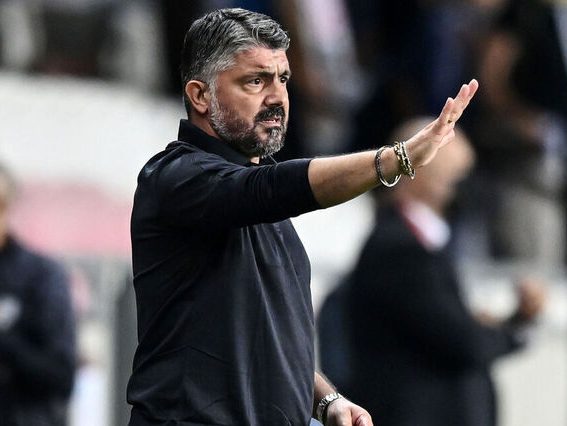
Italy are just one game away from booking their place at the World Cup as they face Bosnia and Herzegovina on Tuesday night, knowing victory will seal qualification after missing the last two tournaments.
A controlled 2–0 win over Northern Ireland last time out has put Gennaro Gattuso’s side in a strong position, but the final step remains the toughest. Gattuso has already begun reshaping the squad with a clear identity, but what exactly do his tactics look like?
Embed from Getty ImagesGennaro Gattuso is a coach who demands his team fight for every ball, playing with intensity and showing real grit. He expects his players to show courage in difficult moments. This is reflected in a system that varies between a 4-4-2 and a 3-5-2, with the midfield providing quality on the ball and keeping it moving. Using a technically strong midfield, Italy look to create quick combinations while also triggering overlaps and attacking down the flanks.
Gattuso sets his team up to stretch the pitch, with both wing-backs pushing high to use space, link with midfielders, attack the box and overlap in search of crossing opportunities. The team often plays down the sides, with crosses as a main weapon — particularly through Federico Dimarco.
It is a side that shows patience in build-up, progressing from defence while also using long balls to exploit spaces left by high pressing opponents. They aim to break down compact blocks with patience, but can also play vertically when needed.
Low Build-Up
When building from the back, Gattuso often pushes forward with four players in defence. For Italy, Dimarco operates as a left-back, while the right centre-back shifts wide to act as a right-back. At times, the team stays as a back three, with Dimarco already advanced as a wing-back. Occasionally, Manuel Locatelli drops into the right centre-back position. As a defensive midfielder, Locatelli can also drop between the centre-backs to help progression through the middle, offering a close passing option before using his quality to move play forward through combinations or long passes. The left central midfielder may drift wide to cover at left-back, allowing Dimarco to push higher, while the right wing-back drops into the second line, forming a 4-4-2 shape.
The attackers, as seen against Northern Ireland, are fluid in their movement. Mateo Retegui or Francesco Pio Esposito partner Moise Kean, with Kean often dropping into an attacking midfield role to link play behind the striker. At times, Kean uses his pace to run beyond, while the centre-forward drops deeper as a number 10. He can also carry the ball centrally, using his speed to combine or release the striker into space to attack the goal, rather than receiving with his back to it. Italy’s midfield trio are all technically strong, capable of linking play, progressing the ball and exploiting wide areas with overlapping wing-backs, while also driving forward through central areas.

High Build-Up
When Italy look to impose themselves in attack, they operate in a 3-5-2 with the centre-backs positioned near the halfway line. These defenders can step forward when required, even entering the box for crosses — particularly Alessandro Bastoni, who is a major aerial threat. The defensive midfielder, usually Locatelli, controls the centre, receiving possession and dictating play with his passing range and vision. The two central midfielders move dynamically, looking to dominate the middle and create overloads around the ball.
The main objective is to create combinations, with wing-backs overlapping to receive passes in stride and deliver crosses — a key feature of Gattuso’s system, especially with Dimarco’s delivery. Dimarco can also cut inside, attack space and combine in central areas before entering the box. Both forwards constantly adjust their positioning, looking to attack crosses while also linking play on the flanks with midfielders and wing-backs. The focus remains on delivering crosses into a crowded box, using Italy’s aerial strength to break down defensive blocks. While Dimarco provides quality on the left, Kean is often the main attacking presence on the right.

Gattuso adapts his tactics depending on the opponent, but his core principles remain: intensity, building from the back with a strong and technical midfield, and attacking through wide areas with crosses. In some situations, he prefers a more controlled approach, with patient possession, fluid movement and positional rotations to outnumber opponents, often working the ball into the ideal crossing position.
Following the dismissal of Luciano Spalletti, Gattuso’s appointment was largely influenced by his history with the Italian national team and his experience during one of its most successful eras. He began his tenure aiming to fix defensive issues, improve an attack that lacked cutting edge, and stabilise a side that had struggled during World Cup qualifying. Just as importantly, he has looked to rebuild the team’s mentality.
After failing to qualify for two consecutive World Cups, Italy’s pride has taken a significant hit. Gattuso has been vocal about the weight of that failure, but has also pushed his players to move forward, embrace the challenge and respond with determination — even when facing adversity in matches.
Italy now stand one game away from either redemption or another painful setback, and Gattuso is determined to take his nation back where it belongs.
Embed from Getty ImagesWritten by Israel Schmidt de Azevedo



Leave a Reply