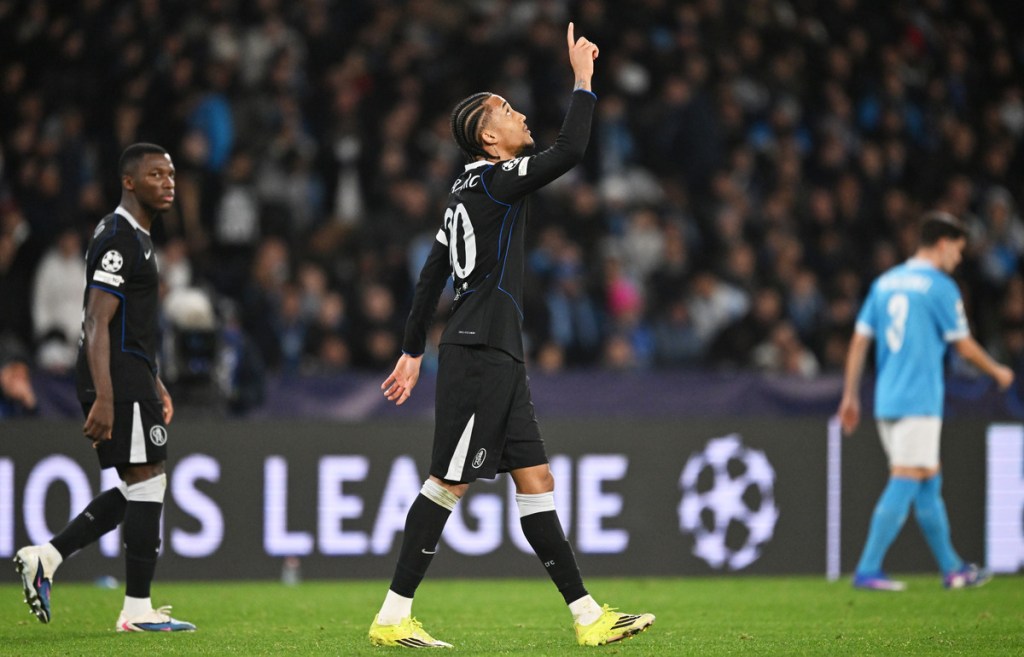
Chelsea came from behind to beat Napoli 3–2 at the Stadio Diego Armando Maradona on the final night of the Champions League league stage, securing automatic qualification for the Round of 16. Enzo Fernández opened the scoring from the penalty spot in the 18th minute before second-half goals from João Pedro completed the turnaround, after strikes from Vergara and Rasmus Højlund had briefly put Antonio Conte’s side in front. Napoli controlled long spells and created the better chances, but Robert Sánchez’s saves and Chelsea’s clinical finishing proved decisive. The tactical themes behind the contest are explored in detail below by Israel Schmidt de Azevedo.
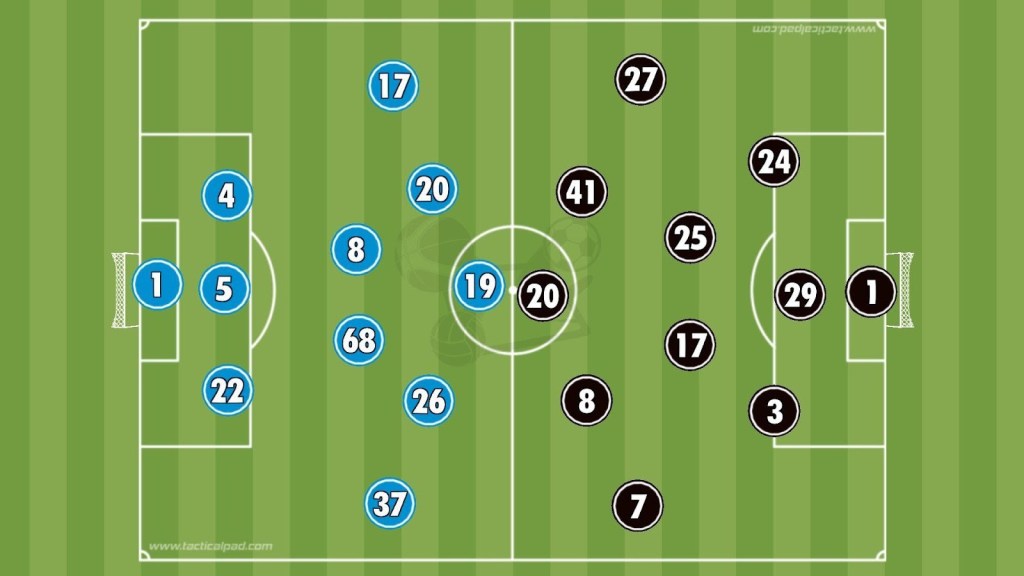
Napoli vs Chelsea was a match between two sides with different objectives on the final round of the Champions League league stage. Chelsea were looking to secure automatic qualification for the Round of 16, while Napoli needed a home win to reach the play-off places. After a difficult European campaign, recent tactical changes had improved Napoli’s performances and they were trying to recover the points dropped earlier in the competition.
In the 11th minute, Estevão delivered a corner to Malo Gusto, who collected the ball and chipped a cross to the far side of the area for Andrey Santos. His header lacked power and was comfortably saved by Alex Meret.
Out of possession, Napoli pressed with Rasmus Højlund and Eljif Elmas forming the first line against Chelsea’s defence. Behind them sat a line of four made up of the central and defensive midfielders, the left wing-back, and a second attacker operating as a right wing-back.
Near the halfway line, the left centre-back shifted wide like a full-back while the right wing-back dropped deeper, with Juan Jesus and Giovanni Di Lorenzo acting as the central pairing. At times Elmas pushed higher on the left with Mathías Olivera holding a deeper position, creating a 5-4-1 shape.
Embed from Getty ImagesChelsea attempted to play through the pressure by splitting Reece James and Wesley Fofana towards the corners of the box. Malo Gusto and Marc Cucurella provided width as full-backs, while Moisés Caicedo and Andrey Santos operated centrally to progress the ball. Enzo Fernández played ahead of them as an attacking midfielder, looking for long passes and combinations with Estevão and Pedro Neto, as well as through balls for João Pedro.
After the early pressing exchanges, possession became scrappy and the ball broke loose between both sides. Malo Gusto found Estevão on the right, who cut inside and passed to João Pedro. As he tried to spin away from Juan Jesus and dribble past Stanislav Lobotka, he was fouled. The set piece proved costly for Napoli.
In the 17th minute, Reece James delivered the free-kick after a short routine with Fernández, and the ball struck Juan Jesus’s arm inside the area. A penalty was awarded. Fernández converted in the 18th minute, placing the ball into the side netting beyond Meret to make it 1–0.
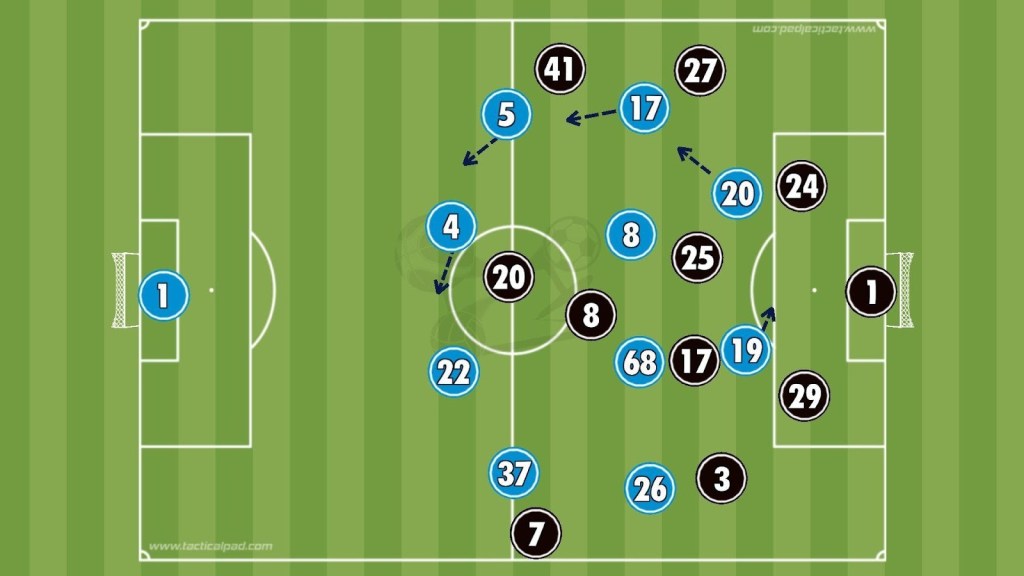
When pressing, Chelsea pushed Estevão alongside João Pedro to form the first line. A midfield four supported them, with Andrey Santos dropping deeper next to Fofana and the full-backs staying ready to protect against counters.
Napoli built from the back with Juan Jesus and Alessandro Buongiorno spreading wide and Di Lorenzo and Olivera as full-backs. Ahead of them, Elmas and Spinazzola operated on the flanks with Lobotka and Scott McTominay centrally, the latter occasionally dropping between the centre-backs to link play. Højlund remained highest, with Vergara close to him as a second attacker.
Immediately after conceding, Napoli tried to respond. They circulated the ball calmly, drew Chelsea forward, and attacked the space between the lines. A cross aimed at Højlund was cleared by Fofana, falling to Elmas, who switched to Olivera on the left. His low delivery towards the near post was well saved by Robert Sánchez.
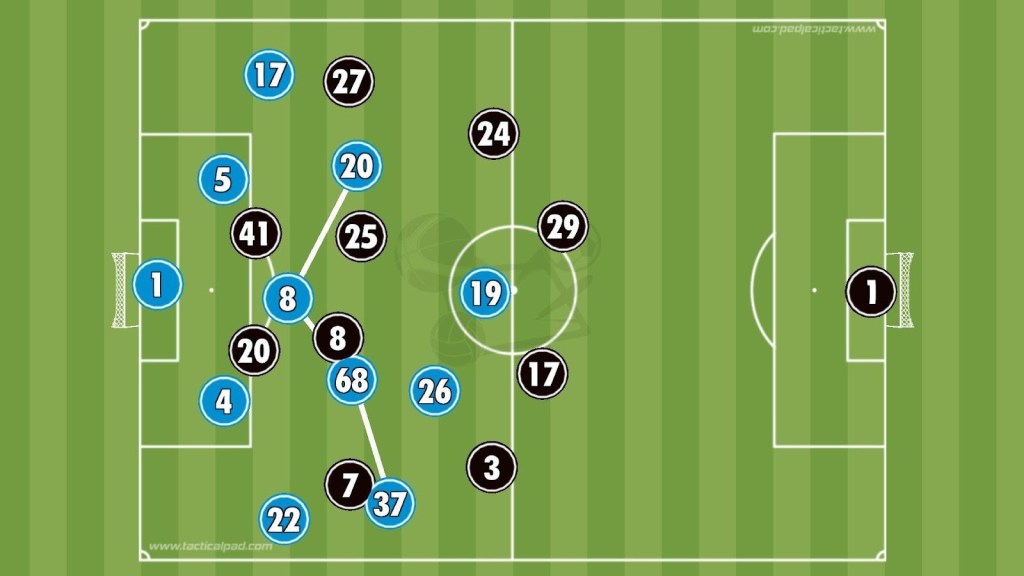
In the 22nd minute, Di Lorenzo overlapped Spinazzola and received the return pass inside the area. Free of markers, he attempted a cross but failed to spot both Højlund and Vergara pulling back unmarked, and the ball drifted harmlessly across the six-yard box for Chelsea to clear.
In possession, Napoli formed an attacking triangle with Elmas and Vergara close to Højlund. McTominay supported just behind them, while the wing-backs and Lobotka created a second line. The three centre-backs remained near halfway to recycle possession. McTominay often dropped to create a midfield four.
Chelsea defended with Andrey Santos dropping into defence to create a back five. Caicedo and Fernández shielded the back line, while Estevão and Pedro Neto worked the flanks. João Pedro stayed high to receive long balls and launch counters.
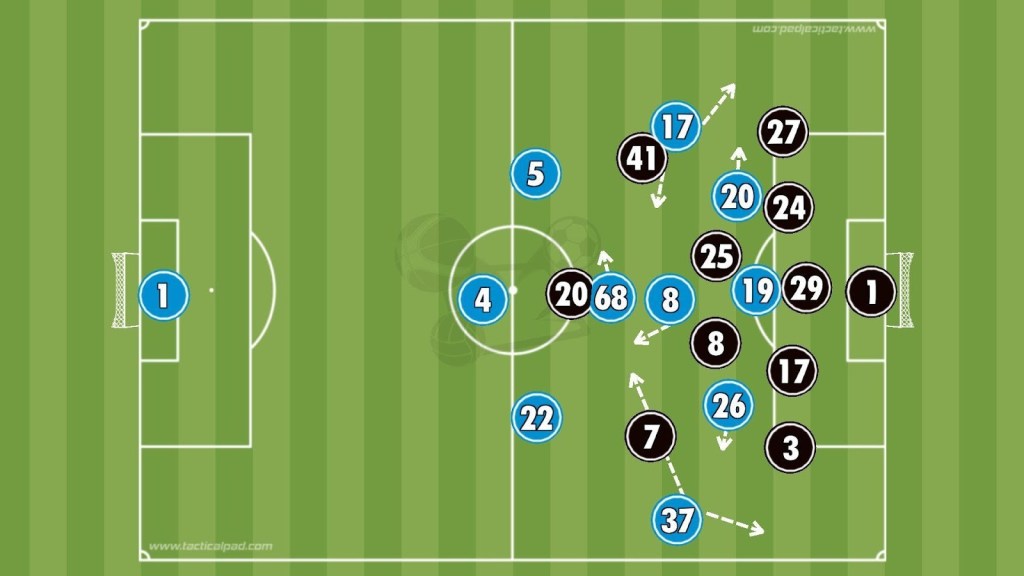
In the 26th minute, James spotted Napoli’s high line and sent a long ball to Pedro Neto. Olivera used his strength to recover and block the attack. João Pedro attempted an acrobatic effort from the rebound, but it went wide.
Defensively, Napoli compacted into a 5-4-1, with wing-backs dropping alongside the centre-backs and the wide attackers tracking back. Højlund stayed forward as the outlet for quick transitions.
Chelsea attacked with João Pedro between the centre-backs, supported by Estevão and Fernández. Neto and Gusto stretched play wide, while Fofana held deeper as cover. Caicedo and Andrey linked defence to attack, and James and Cucurella advanced when possible.
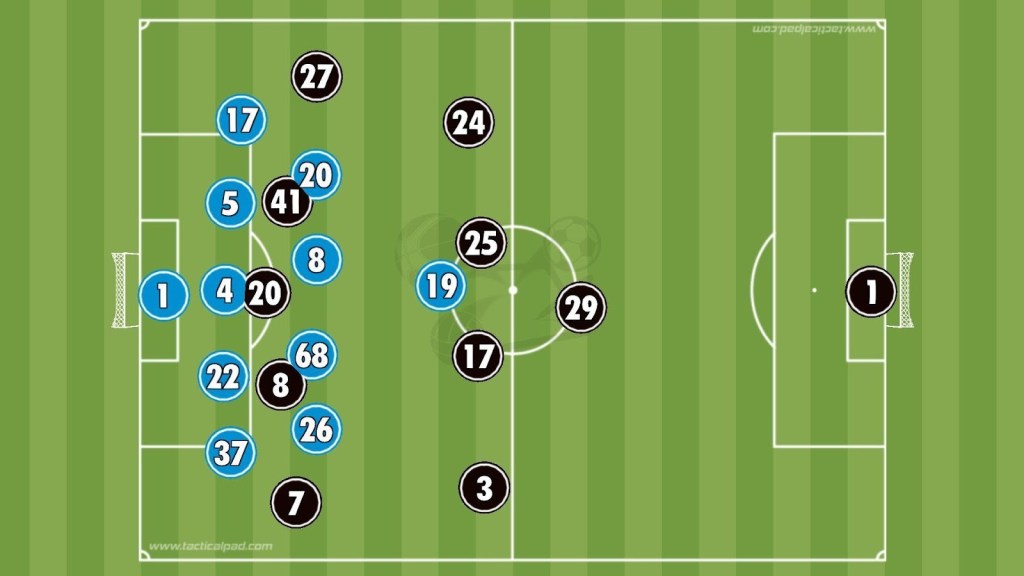
In the 28th minute, Di Lorenzo broke into the area after a misjudgement from James but Sánchez saved with his leg. In the 32nd minute Napoli’s press paid off, with Olivera intercepting and Vergara driving forward before finishing neatly into the corner to equalise.
Napoli grew in confidence. In the 43rd minute, Olivera’s low cross found Højlund, who finished powerfully off the post to make it 2–1.
The second half began with Napoli controlling possession, but Chelsea improved after substitutions. João Pedro equalised with a superb solo goal, cutting inside and finishing into the top corner. Chelsea then seized momentum. In the 82nd minute João Pedro combined with Palmer before finishing again to complete the comeback.
With the win, Chelsea secured a top-eight finish and automatic qualification. They started strongly but again showed defensive fragility and inconsistency in possession, issues their new coach will need to address. Napoli, meanwhile, were competitive but paid for earlier dropped points and a long injury list. Their focus now turns back to Serie A and the domestic cup as they aim to return to the Champions League next season.
Embed from Getty ImagesWritten by Israel Schmidt de Azevedo


 INMR FOOTBALL
Leave a comment