

Milan earned a 2–0 win over Lecce thanks to second-half goals from Loftus-Cheek and Pulisic, though both sides also saw strikes ruled out by VAR.
Lecce frustrated Milan for long spells with a compact 5-4-1 shape, but individual errors and Milan’s quality eventually told. Israel Schmidt de Azevedo explores the key tactical themes from the match.
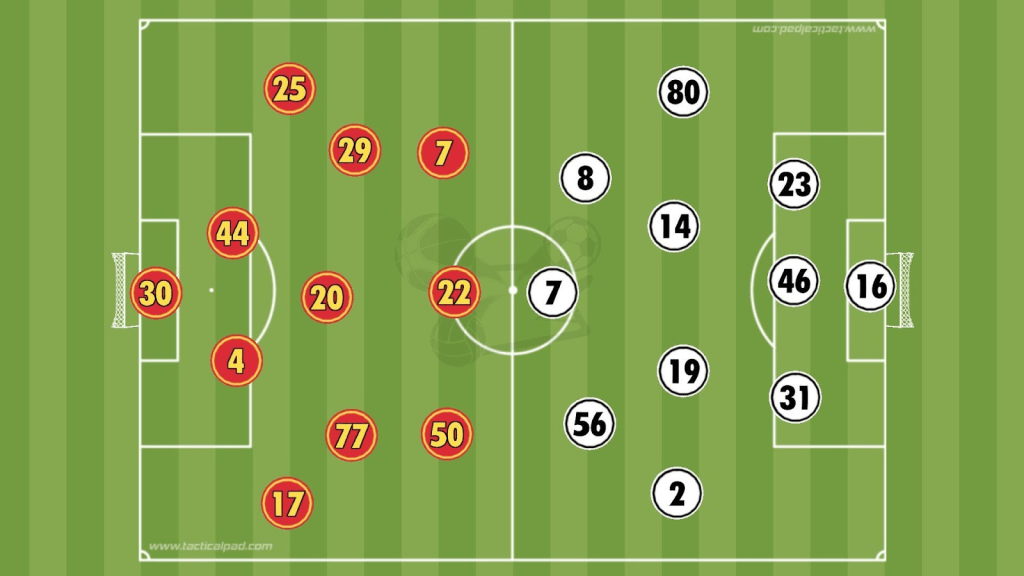
Milan started the game in control, dominating possession and circulating the ball to limit any early momentum from Lecce, who were playing at home.
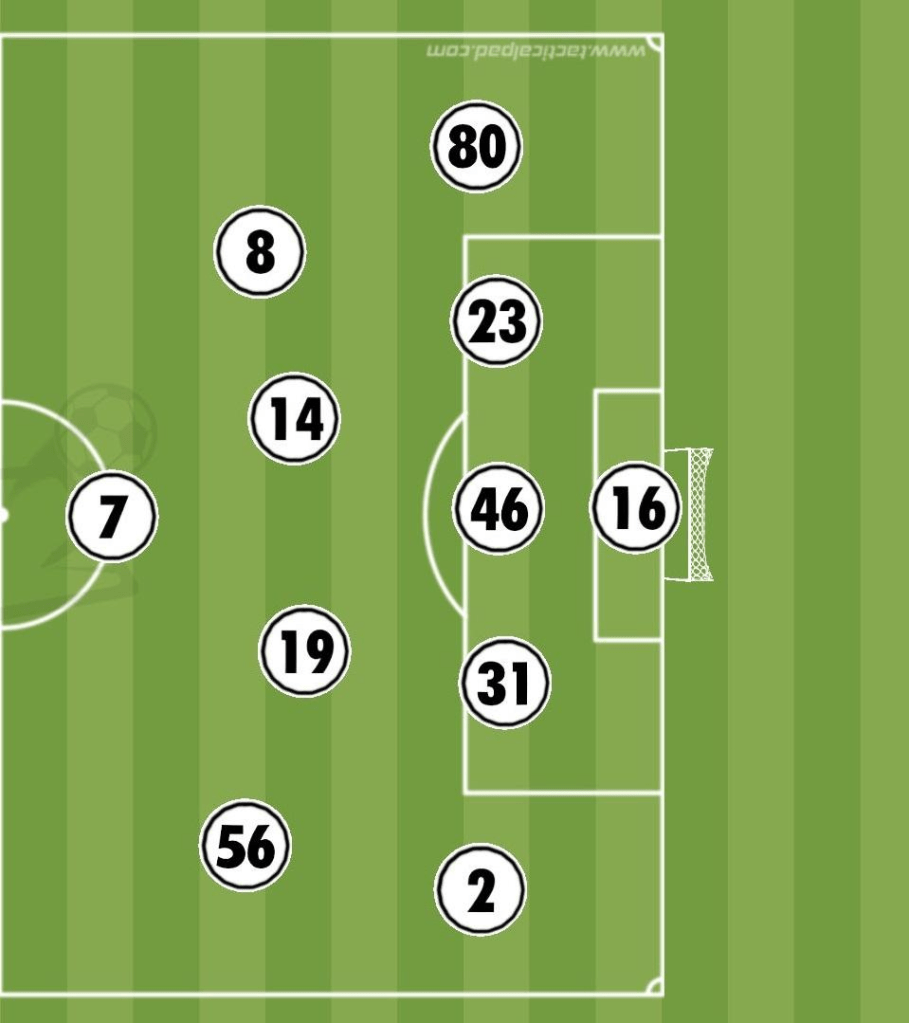
Although Lecce lined up in a 4-3-3, they shifted into a 5-4-1 when defending. The adjustment came as the right centre-back tucked into the middle, while the right-back stepped inside to become a right centre-back. The left centre-back and left-back both shifted slightly wider, and the right winger dropped into a right-back role, forming a back five.
In midfield, the two central midfielders slid across to the right, with the defensive midfielder joining them, while the left winger dropped into midfield. This left only the centre-forward up front. Lecce’s clear aim was to close spaces and neutralise Milan’s attacking threats.
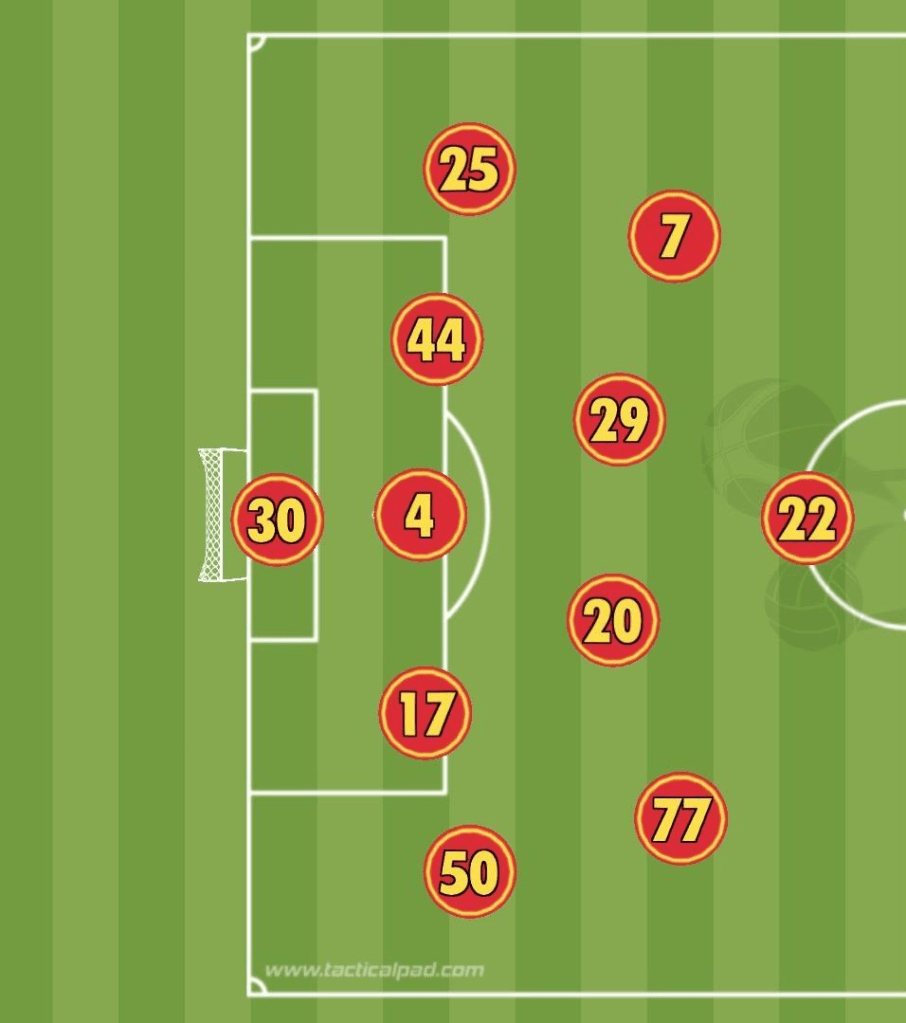
Milan responded by converting Loftus-Cheek from a right winger into a second striker alongside Giménez. Behind them, four players pushed high, looking to pin Lecce deep and dominate the final third.
Modrić and Fofana played as advanced central midfielders, drifting wide, while the right wing-back operated almost as a wide midfielder and the left winger stretched the play on the opposite side.
Deeper, a back four provided cover, with Tomori shifting out to right-back and Estupiñán filling in at left-back.
Milan’s approach worked immediately, and from a corner in the 4th minute, Gabbia scored with a header, only for VAR to disallow it after he was judged to have pushed Coulibaly.
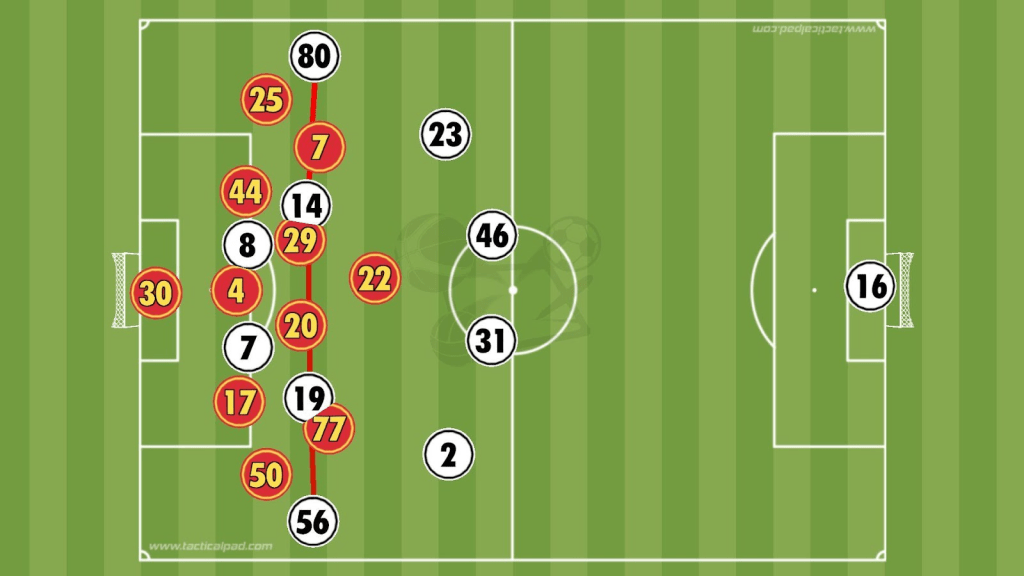
The incident sparked Lecce into more aggressive pressing. They pushed Milan back, forcing them to play out under pressure. Milan began losing possession with misplaced passes, allowing Lecce to grow in confidence.
In the 21st minute, Lecce created a promising move, but Pierotti held onto the ball too long. By the time he released it, Milan had recovered, and the chance fizzled out with a deflected shot. Just before half-time, Lecce countered through Kaba, who combined with Pierotti. Again, Pierotti opted to go alone, losing the ball before Kaba picked it up and curled his effort over the bar.
Milan wasted a huge chance at the start of the second half when Fofana sliced open Lecce’s defence with a trivela pass to Giménez. Clean through on goal, the striker’s finish was poor, dragging the shot wide.
When defending, Milan reverted from a 3-4-3 to a 5-4-1, with the three centre-backs narrowing, the wing-backs dropping deep, and Loftus-Cheek and Saelemaekers stretching wide to form a midfield four.
In the 60th minute, Tomori fed Saelemaekers, who slipped a perfect through ball to Giménez. The forward finished well, but VAR again intervened, ruling the goal out for offside.
Six minutes later, Milan finally found the breakthrough. Modrić whipped in a free-kick that was flicked on by Loftus-Cheek, the deflection beating the goalkeeper to put Milan 1–0 up.
In the 86th minute, Milan doubled their lead. Maignan launched the ball long, and although Gaspar initially won the aerial duel, Veiga’s poor control allowed Pulisic to steal possession. The American surged forward and finished calmly in a one-on-one, sealing Milan’s 2–0 victory.
Despite the result, Milan struggled to build effectively from the back. Their attacking play was sloppy, with too many misplaced passes and wasted opportunities. The goals came from a set piece and a defensive error rather than sustained attacking quality. Lecce had their moments in the first half, particularly through Pierotti, but their lack of decisiveness cost them.
In the end, Milan left with the win but the performance left plenty of questions unanswered.
Written by Israel Schmidt de Azevedo



 INMR FOOTBALL
Leave a comment