
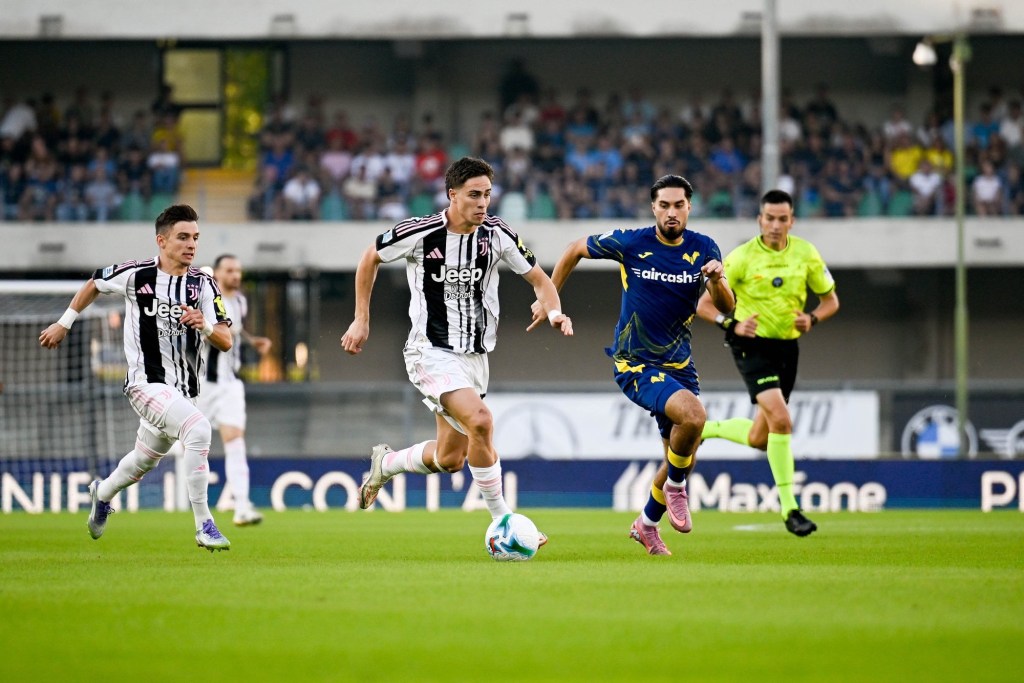
Hellas Verona held Juventus to a 1–1 draw in Serie A, capitalising on quick transitions and defensive discipline to frustrate Massimiliano Allegri’s side. Despite dominating possession, Juventus left spaces in behind, which Verona exploited with sharp counter-attacks and direct running. Israel Schmidt de Azevedo analyses how Verona’s structure nullified Juventus’ high-possession approach.

Hellas Verona v Juventus was a game where both teams tried to attack following their own ideas. Juventus usually sit a little deeper but adapt depending on the opponent, and in this match they sought to impose themselves with high possession. Verona defended well and looked to exploit the counter-attack, attacking the spaces left by Juventus’ high press. As a result, Verona finished with more shots and a similar number of big chances, despite the huge difference in possession.
Verona were not afraid to raise their own pressure when necessary. In the 11th minute, Federico Gatti tried to head the ball back to Michele Di Gregorio, but his touch was too short. Orban pounced, skipped past Pierre Kalulu, but failed to punish Juventus as his finish was weak and straight at Di Gregorio.
Verona’s press was led by Orban as the central forward. Giovane stretched play wide on the right, while Bernede moved closer to operate as a second striker on the left. Serdar stepped out from midfield into a mezzala role, joining the attack from deeper areas, and Darko Bradarić pushed forward from wing-back to do the same on the opposite flank. At times, Nelsson moved from the central defensive role to act as a right wing-back, while Frese did similarly from the left centre-back position. This gave Verona additional protection against Juventus’ transitions.
Juventus countered by pushing Kalulu and Lloyd Kelly wide, effectively as full-backs. Manuel Locatelli anchored midfield, with Thuram on the left and Conceição on the right, both helping with progression. João Mário and Andrea Cambiaso stayed wide, while Dušan Vlahović and Kenan Yildiz floated up front.
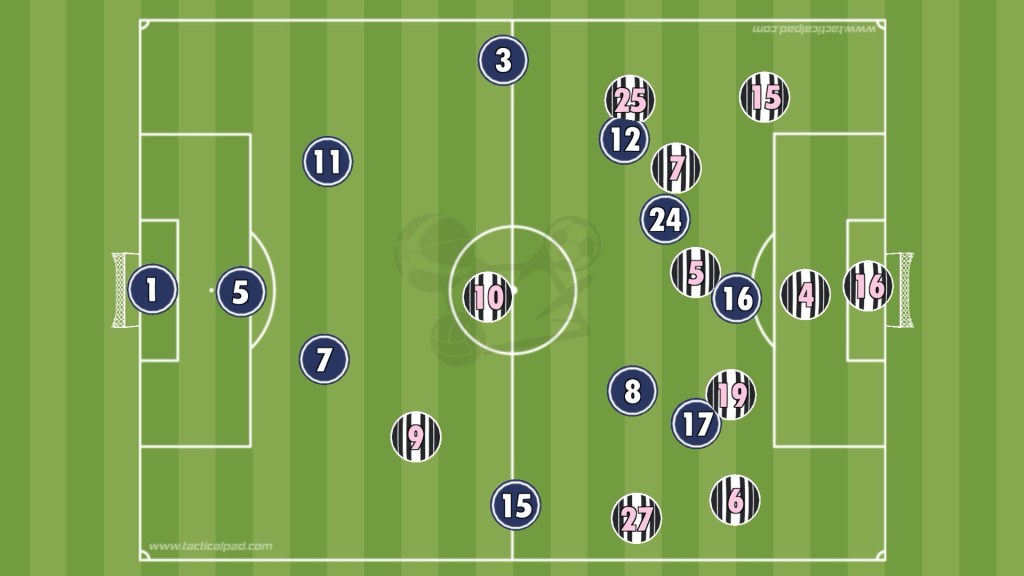
Defensively, Verona dropped their wing-backs to form a line of five, with their midfield trio shifting side to side to cover gaps. The two forwards waited to counter when the chance arrived. Juventus, on the other hand, pushed their wing-backs into advanced winger positions, leaving their defensive line high and wide to reduce Verona’s countering space.
Juventus took the lead in the 19th minute. Thuram spread play right to Conceição, who beat his marker near the penalty area and finished low into the corner.

In the 40th minute, João Mário misjudged a header, the ball striking his arm inside the box. After a VAR review, a penalty was awarded. Orban converted powerfully, sending Di Gregorio the wrong way to level the score.
Early in the second half, in the 51st minute, Juventus thought they had caught Verona out with a quick throw-in. Vlahović spun away and struck first time, but his effort was poor and the chance was wasted. Three minutes later, Verona broke at pace, with Orban firing a long-range shot that Di Gregorio saved comfortably.
In the 64th minute, Belghali dribbled past Adžić and squared for Orban, who managed to control the ball before shooting over. Just three minutes later, Verona thought they had their second. Núñez flicked on a corner, Serdar headed in from close range, but VAR ruled him offside.
Verona kept pushing. In the 73rd minute, Belghali released Orban through on goal, but his shot whistled just wide. Six minutes later, Frese met a loose ball outside the box with a powerful strike, only for Di Gregorio to save again.
Verona stuck to their identity, defending deep and countering with energy. Juventus controlled possession but struggled to cope with Verona’s transitions, ultimately leaving with just one point. For Allegri, it felt more like relief than progress.
Written by Israel Schmidt de Azevedoa



 INMR FOOTBALL
Leave a comment