Antonio Conte’s Napoli is an extremely intense side. The team thrives on counter-attacks built through quick associative play, while also exploiting long balls for second attackers such as David Neres or for Rasmus Højlund’s work as a pivot.
Napoli are also comfortable in possession; thanks to the technical quality of their squad, they are able to create combinations near and inside the opposition’s penalty area, using gaps to generate chances and score goals.
Embed from Getty ImagesFollowing a series of injuries, Conte was forced to modify his approach, and the impact was immediate. After an inconsistent start to the season, Napoli found both a clear playing identity and a settled starting XI, despite several injuries occurring within a short period of time.
In this new tactical setup, the player who benefitted most was David Neres, who moved from a bench role to becoming one of Napoli’s key figures, alongside Højlund and Scott McTominay.
Low Build-Up
When building from deep, Napoli spread their centre-backs across the width of the penalty area. The central centre-back steps slightly higher to stretch the opposition shape and provide a passing option behind the first line of pressure. He shifts laterally depending on the direction of play, supporting associative combinations when progression is required.
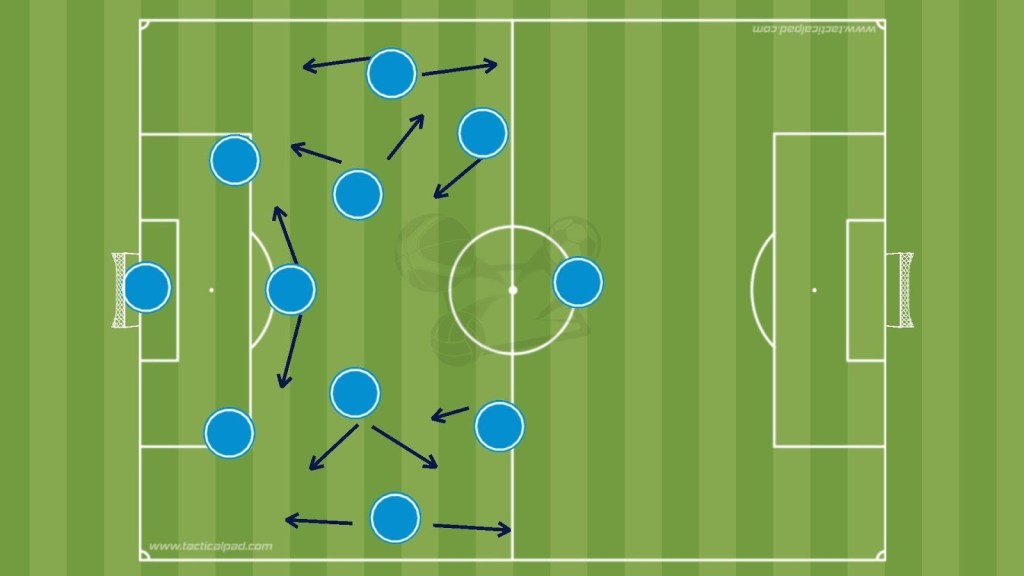
Both central midfielders drop close to the defensive line to provide quality in possession. They support combination play with the wing-backs and wide centre-backs, while also offering long passing options to exploit runs in behind, particularly targeting the pace of the wing-backs and second attackers. The wing-backs initially position themselves near the start of the second third, waiting to receive the ball before using their speed. When the moment is right, they attack the space left by opposing full-backs and wing-backs.
The second attackers typically operate wide but will occasionally move into central areas to offer passing options through the middle or act as an attacking midfielder. This role is most often filled by David Neres, who adds both speed and passing quality when linking with Højlund. Højlund remains the most advanced player, positioned to receive long balls, act as a pivot, or exploit space behind the defensive line with his pace.
Defensively, Napoli narrow their back line, with all centre-backs positioned close together and the wing-backs dropping into full-back roles. While maintaining their defensive shape, the wing-backs are also prepared to step forward aggressively to apply pressure or attack space when possession is regained. The defensive line shifts laterally to overload wide areas and maintain balance.
Both second attackers drop back to form a compact line of four, effectively working as wing-backs when out of possession. They also step forward alongside a central midfielder to apply the initial press. Højlund remains the highest player, leading the press and initiating defensive pressure.
This defensive structure often forces opponents deeper into their own half. Although primarily designed for defensive solidity, it enables Napoli to recover the ball and immediately launch fast counter-attacks through quick combinations and long passes, reaching the opposition penalty area in just a few touches.
High Build-Up
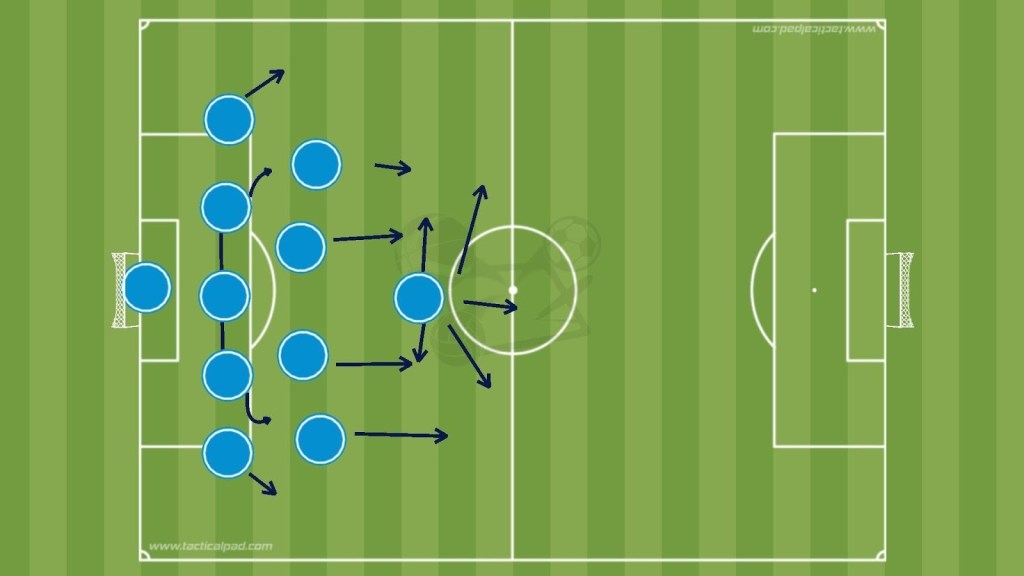
When building higher up the pitch, Napoli look to create through positional overloads, accumulating players around the ball and using through passes to exploit space. They frequently attack down the flanks to create crossing opportunities, while also combining through short exchanges and individual dribbles to enter the box.
Both wide centre-backs push high into the attacking half, providing width and supporting progression — particularly Giovanni Di Lorenzo on the right. The central centre-back positions himself near the halfway line, acting as the main distributor. The two central midfielders move closer to the forwards to support combinations. McTominay is usually granted more freedom, often arriving late into the box to attack crosses and use his aerial ability to create danger.
The wing-backs consistently attack wide areas, delivering crosses into the box or cutting the ball back from advanced positions. The second attackers stay close to Højlund but also drift wide to support combination play and receive the ball in space for individual actions. This constant rotation allows Napoli to overload the ball side while disrupting opposition marking schemes through pace and movement.
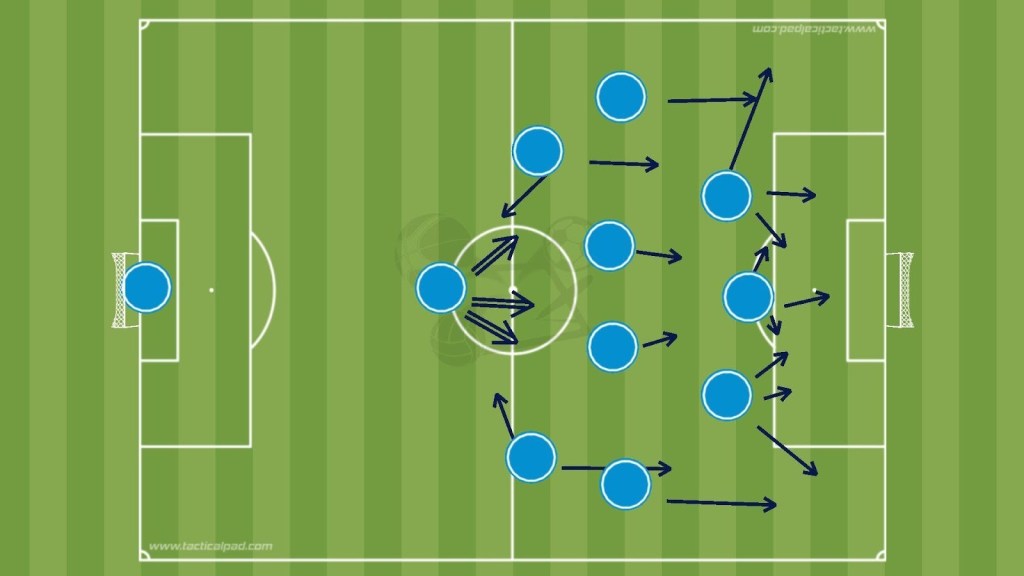
This tactical structure has clearly elevated Napoli’s overall performance. The team is creating more chances and scoring more goals, while David Neres has emerged as a decisive figure within the system. The main question now is how Conte will adapt once the injury list shortens. Where will players like Kevin De Bruyne — Napoli’s standout performer before his injury — and André-Frank Zambo Anguissa fit into this setup? How will they adapt, and how can Conte maintain balance while keeping the system effective?
These are questions likely occupying the minds of Napoli supporters. What is clear, however, is that Napoli currently sit third in Serie A, remain capable of challenging the league leaders, and are well-positioned to improve their standing in the UEFA Champions League. The structure has already delivered silverware, with success in the Supercoppa Italiana confirming the early rewards of Conte’s approach.
Written by Israel Schmidt de Azevedo


 INMR FOOTBALL
Leave a comment