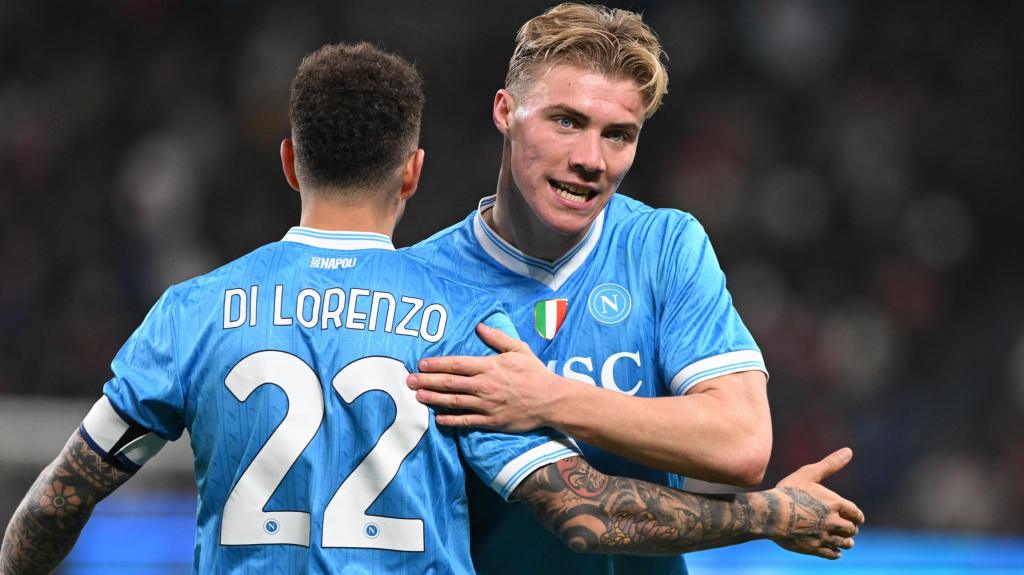
Napoli controlled proceedings to secure a 2–0 win over Milan, capitalising on sustained possession and clinical moments in the final third. David Neres opened the scoring before Rasmus Højlund sealed the result with a second-half finish, as Milan struggled to impose themselves without Luka Modrić in midfield.
In this piece, Israel Schmidt de Azevedo breaks down the key tactical themes that defined the contest, from Napoli’s structured dominance to Milan’s counter-attacking limitations.
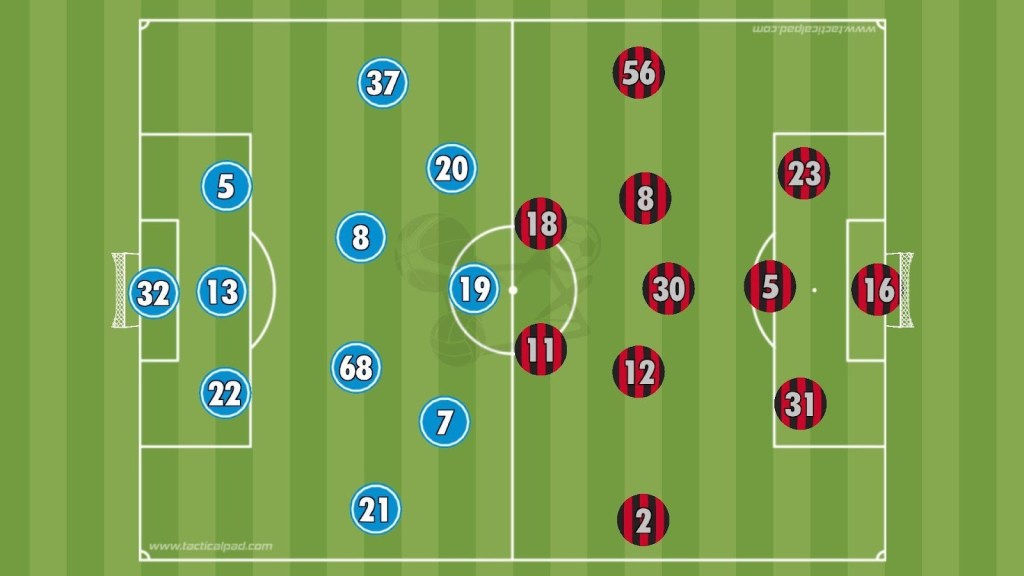
Napoli vs Milan was a match in which Napoli dominated possession from the opening minutes. Milan looked to counter-attack, but Napoli controlled the ball for almost the entire game.
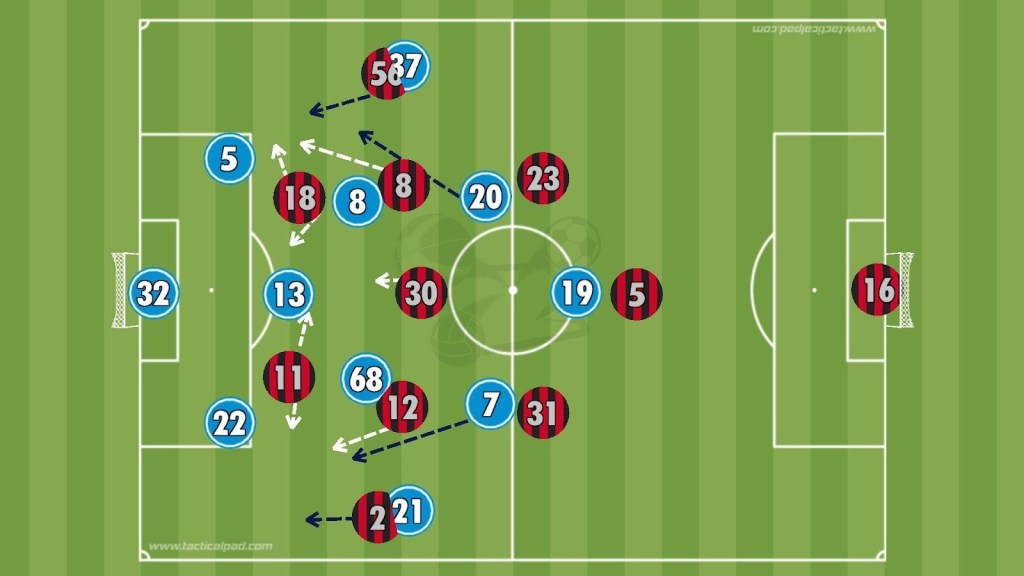
In attack, Milan initially formed a front three with Christian Pulišić operating centrally. Christopher Nkunku drifted to the left, while Ruben Loftus-Cheek moved out of his central midfield role to act as a second attacker on the right. Adrien Rabiot positioned himself close to this attacking line, with the right wing-back stepping inside to function as a central midfielder, creating a compact block of five players. This structure frequently changed: Alexis Saelemaekers would drop back into the wing-back role, Loftus-Cheek would return to central midfield, and Pulišić would sometimes drop deeper as an attacking midfielder to open space for Nkunku and Loftus-Cheek. At times, Rabiot also moved centrally to help with build-up play, a role Milan usually assigns to Luka Modrić. On the left, Pervis Estupiñán stayed wide to provide width. Both side centre-backs pushed wider to increase numerical superiority and stretch the pitch, while Ardon Jashari moved closer to Koni De Winter to form a deeper centre-back pairing and initiate build-up from the back.
Napoli defended by narrowing their shape. Both wing-backs dropped into full-back positions, forming a back five. In midfield, both central midfielders dropped closer to the centre-backs to act as defensive midfielders, while the two second attackers drifted wide to form a compact line of four. Rasmus Højlund stayed higher up the pitch.
In the 5th minute, Estupiñán took a throw-in into the middle of the penalty area. The ball travelled over Rabiot, who stepped forward and flicked it on. Strahinja Pavlović attempted a bicycle kick but failed to connect cleanly. The loose ball dropped to Loftus-Cheek, who managed a touch, but Sergej Milinković-Savić saved with his leg.
In the 16th minute, Fikayo Tomori received the ball on the right and delivered a cross that travelled across the entire box and almost went out of play. Nkunku recovered it and headed the ball back into the area, where a Napoli defender cleared. The ball fell to Saelemaekers, who attempted a difficult half-volley but sent it high over the bar.

In the 21st minute, following a corner kick, Mike Maignan initially caught the ball but lost control as he fell after colliding with a Napoli attacker. Amir Rrahmani collected the loose ball and drove forward before passing wide to Eljif Elmas, who attempted an off-balance shot. Højlund tried to redirect the effort inside the six-yard box but missed, and the ball went wide.
When attacking, Napoli formed a compact structure with Højlund central and the two second attackers close to him. The midfield line pushed higher to provide support on the flanks, with Scott McTominay making late runs into the penalty area when possible. Defensively, the centre-backs were staggered, with the side centre-backs positioned high in the opposition half and the central centre-back staying deeper near the halfway line.
Milan defended by dropping their wing-backs into full-back roles and narrowing the centre-back line. The three midfielders formed a compact line in front of the box, while the two attackers stayed ahead to press and screen passes, creating a five-man defensive structure.
In the 32nd minute, Giovanni Di Lorenzo played a long ball over Milan’s defence. Matteo Politano, who was offside, left the ball, allowing Højlund to run onto it. He cut inside and passed to McTominay outside the box, who struck a first-time shot that skimmed the ground and went close to the post. Although the effort missed the target, Maignan appeared well-positioned to deal with it.
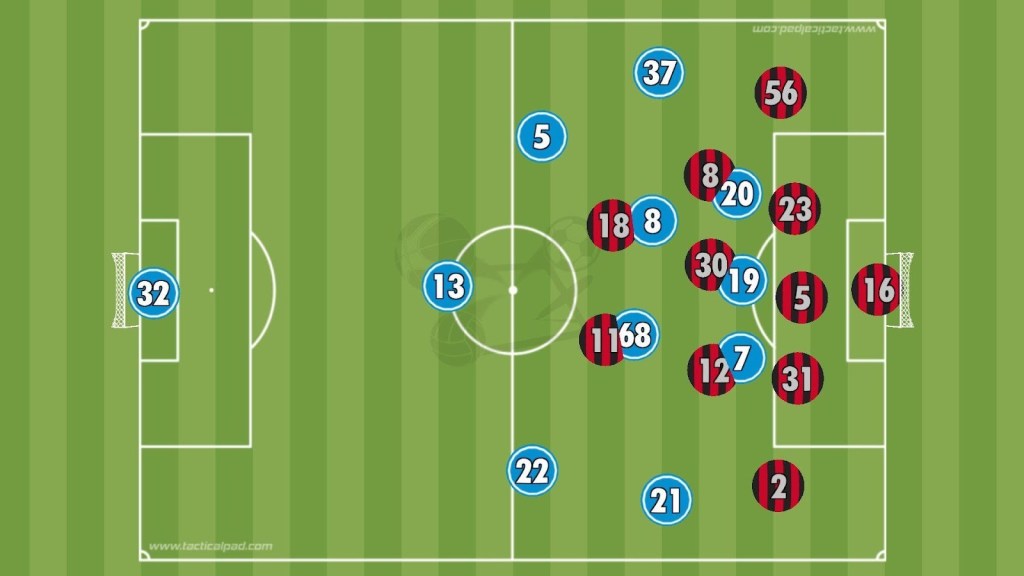
When pressing, Napoli initially formed a diamond shape, with Stanislav Lobotka stepping up closer to the attackers. Behind this, McTominay dropped between the central and left centre-backs to create a back four, while both wing-backs positioned themselves higher to defend against long balls down the flanks.
Milan attempted to bypass the press by opening up the central and left centre-backs. Tomori shifted from right centre-back to right-back, while Estupiñán dropped from wing-back into a left-back role. Jashari positioned himself close to the defenders to offer passing options through the middle. Rabiot and Loftus-Cheek acted as advanced central midfielders, progressing the ball through both central and wide areas as mezzalas. Nkunku moved centrally, with Pulišić slightly wider and occasionally dropping deeper as an attacking midfielder to help link play and support counter-attacks. Saelemaekers advanced from wing-back to act as a second attacker on the right when possible.
In the 37th minute, following a Napoli corner, Saelemaekers carried the ball forward down the left before cutting inside. Pulišić made a run behind him into space, dragging Napoli’s defence across and opening space centrally. Nkunku received the pass, controlled it, and shot, but Milinković-Savić made a fingertip save. The referee awarded a goal kick.

In the 39th minute, Napoli built an attack through Leonardo Spinazzola, who cut inside and played a pass through the defence to Højlund inside the box. Højlund shielded the ball, spun past his marker, and delivered a low cross. Maignan attempted to intervene but made a mistake, only managing to deflect the ball. David Neres reacted quickest, adjusted his body, and finished with his left foot to open the scoring.
When pressing again, Milan had both Nkunku and Pulišić drifting towards the ball, with one centralising when the other moved wide. Rabiot and Loftus-Cheek stepped higher when required, forming a line of three attackers, while Jashari stayed deeper with the centre-backs. At times, Jashari also advanced to support the forwards. Both wing-backs pushed high to provide width and crossing options, while the side centre-backs stepped into the attacking half.
Napoli responded by advancing their central centre-back and spreading the side centre-backs wide. Both central midfielders dropped closer to the defence to offer short passing options and support build-up. The wing-backs stayed high but moved inside when necessary to combine along the flanks. The attackers occasionally dropped deeper to overload wide areas, while the centre-forward remained the most advanced player.
In the 46th minute, Elmas played Højlund through on goal. The striker shaped to cut inside but shifted slightly wider before shooting. Maignan reacted well to deny Napoli a second goal.
In the 63rd minute, Spinazzola received the ball from Juan Jesus and passed to Højlund, who turned his defender and drove towards the byline. From a tight angle, he struck the ball, which hit the post before going in to make it 2–0.
In the 73rd minute, Youssouf Fofana lost possession under pressure from McTominay. The ball fell to Højlund, who attempted a stepover, pushed past Tomori, and unleashed a powerful shot from a better angle that narrowly missed the target.
Napoli and Milan both executed their tactical plans effectively. Milan allowed Napoli to dominate possession, and although Napoli technically finished with less of the ball, it felt as though they controlled the game throughout. Milan defended deep and occasionally pushed their line higher to press, but their counter-attacking threat was limited. The absence of Modrić in midfield was evident, as his technical quality and decision-making usually elevate Milan’s attacking play.
Napoli showed patience in possession and knew when to press aggressively and counter. Højlund was the standout performer, contributing through hold-up play, movement outside the box, and his goal. Napoli looked solid throughout, and their tactical adjustments improved their performance, making them increasingly dangerous. Now, Antonio Conte must decide how to reintegrate Kevin De Bruyne once he returns from injury, considering how central he had been before his absence. Napoli now await the winner of Bologna vs Inter, while Milan turn their full focus back to the Serie A title race.
Embed from Getty ImagesWritten by Israel Schmidt de Azevedo


 INMR FOOTBALL
Leave a comment