
Juventus fought back to draw 1–1 with Atalanta after a dramatic second half in Turin. Sulemana opened the scoring for the visitors before Juan Cabal’s late strike rescued a point, moments before Atalanta were reduced to ten men. Israel Schmidt de Azevedo analyses the tactical themes from the match.
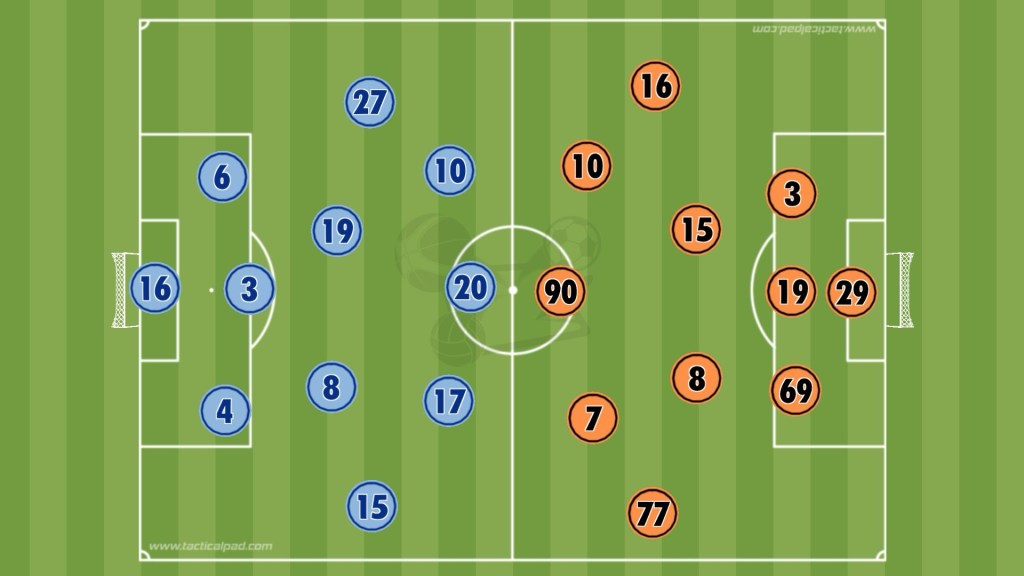
Juventus and Atalanta played out a game of two distinct halves. The first evenly matched, and the second dictated by Atalanta’s defensive retreat and Juventus’s late response.
Atalanta began with a compact defensive shape, both wing-backs dropping deep to form a narrow back five. The second line pushed wide, forming a 5-4-1 block with the centre-forward staying high near the halfway line, ready for long-ball counters. Juventus, meanwhile, pressed high from the start, setting up in a 3-4-3 that pushed its defensive line to midfield. The wing-backs advanced, creating width, while the front three stretched Atalanta’s shape.
The press worked immediately. Inside the first minute, Juventus won a corner after aggressive pressing, and in the 2nd minute, Kenan Yıldız’s cross found Pierre Kalulu, whose header was tipped onto the post by Marco Carnesecchi.
Atalanta replied with a quick transition in the 4th minute, as Teun Koopmeiners dispossessed Juventus in midfield and carried the ball forward. He opted to shoot instead of feeding Loïs Openda, sending his effort just wide.

After the early exchanges, Atalanta began to find rhythm in possession. Juventus adjusted defensively by pulling its wing-backs deeper and widening the second attackers to track the flanks. The midfield pair stepped up alongside Openda to press, with Marcus Thuram floating between the lines.
Atalanta’s attacking pattern featured a fluid front three. The striker often dropping as a false nine while the wide forwards advanced into central channels. Both wing-backs stayed wide to stretch Juventus’s back line, while the centre-backs pushed high. Their pressure nearly paid off in the 6th minute when Davide Zappacosta fed Krstović, whose curling effort whistled just past the top corner.
Juventus created a clear chance in the 17th minute when Andrea Cambiaso dribbled past three players and found Yıldız, who set up Adžić for a first-time shot. Carnesecchi made an outstanding diving save. Two minutes later, Thuram’s deflected effort almost wrong-footed the goalkeeper.
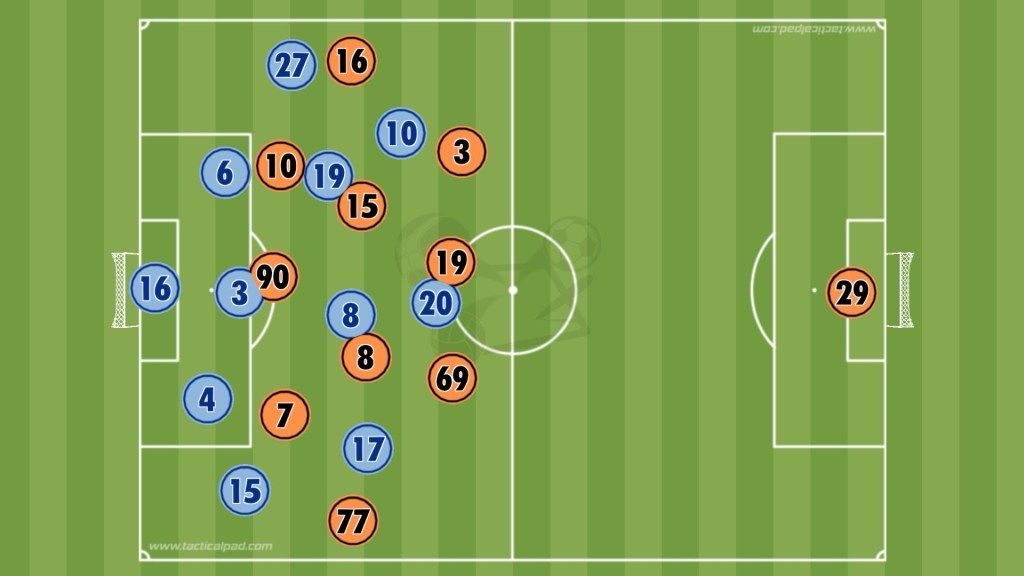
Atalanta’s best first-half chance came in the 28th minute when Berat Djimsiti rose unmarked to meet a corner, but his looping header landed on top of the net. Their breakthrough arrived in the 46th minute. Gatti lost possession under pressure, and Ahanor intercepted, feeding Sulemana. The winger dribbled past two defenders before finishing low into the far corner to give Atalanta a 1–0 lead.
The visitors should have doubled their lead in the 52nd minute when Pašalić sent a long ball to Krstović after Gleison Bremer’s missed header. One-on-one with the goalkeeper, Krstović fired wide, wasting a golden opportunity.
Juventus grew into the game after the hour mark. In the 74th minute, Yıldız almost caught Carnesecchi off guard with a chipped cross that forced a save. Four minutes later, Zhegrova’s low delivery caused chaos in the box. Odilon Kossounou failed to clear, and Juan Cabal pounced, calmly finishing into the corner to make it 1–1.
Just two minutes after the equaliser, Marten de Roon was sent off for a second yellow card after a reckless challenge on Cabal, leaving Atalanta down to ten men. Juventus pushed for a winner, with Weston McKennie testing Carnesecchi from close range in the 88th minute, and Edon Zhegrova forcing another fine save in the 92nd minute after a deflected shot.
The match ended level. Atalanta were composed and clinical early on but lost control after failing to kill the game. Juventus struggled creatively until the red card shifted momentum, but Cabal’s goal ensured they took something from a match that looked lost.
Written by Israel Schmidt de Azevedo


 INMR FOOTBALL
Leave a comment