

Italy opened the Gattuso era in style with a dominant 5–0 victory over Estonia. Moise Kean, Mateo Retegui, Giacomo Raspadori, Andrea Cambiaso and Alessandro Bastoni all found the net in a match where the Azzurri’s pressing intensity and wing play proved decisive. Israel Schmidt de Azevedo explores the key tactical themes from the match.
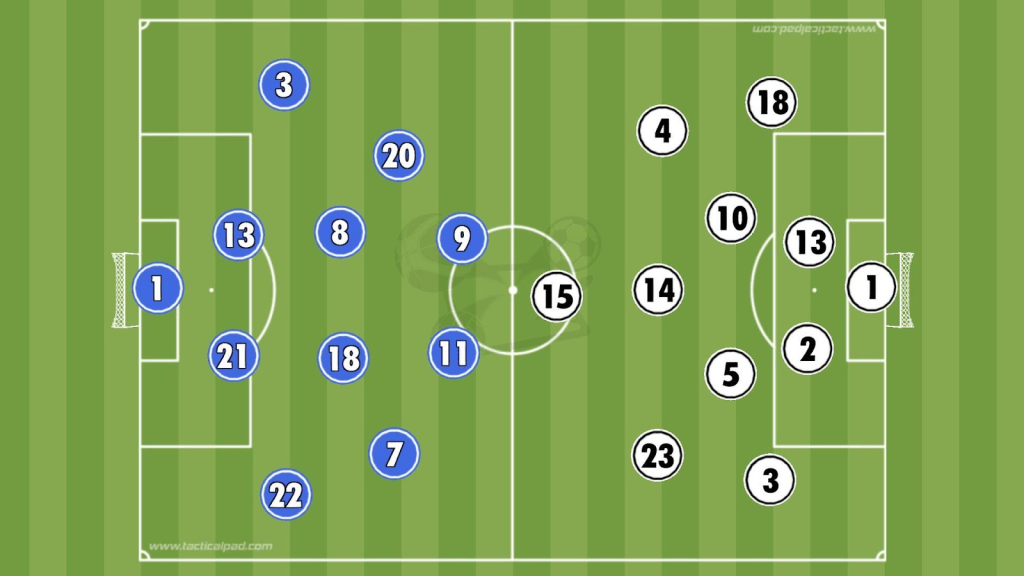
Italy vs Estonia was an interesting match that started with Italy trying to suffocate Estonia by pressing high with both midfielders and defenders. The defensive line of four pushed almost up to midfield, while the midfielders held positions between the second and final thirds of the pitch.
Moise Kean and Retegui floated in front of these two well-structured lines, with Italy’s block shifting across to overload the ball side, forcing Estonia deep into their own area and making it difficult for them to play out.
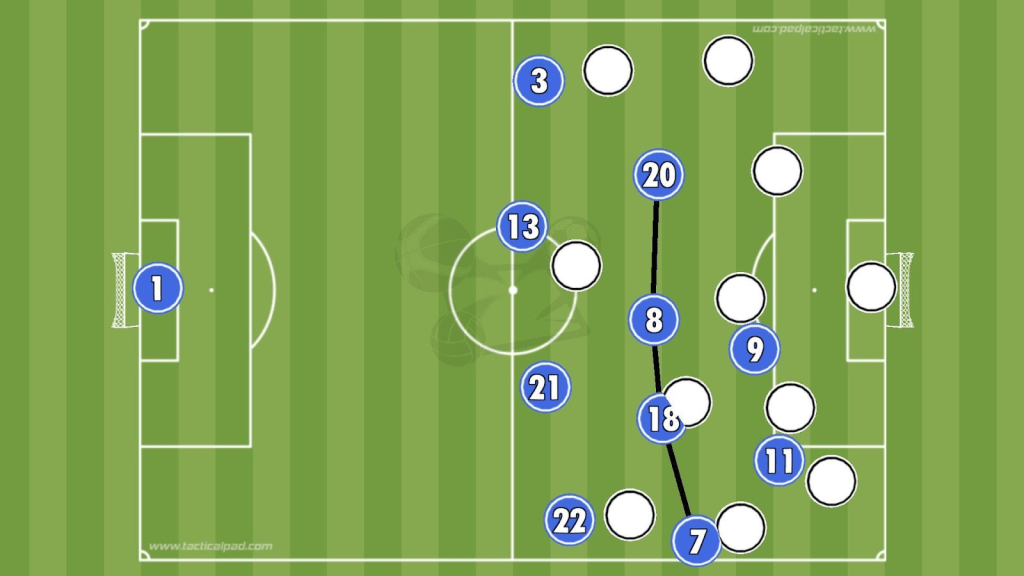
On the other hand, Estonia tried to counter-attack but rarely had success. When they managed to break forward, Italy quickly reorganised to defend. The lack of support runners from Estonia also made it difficult to trouble Italy’s defence. Once again, Italy shifted numbers towards the side where the ball was, suffocating space.
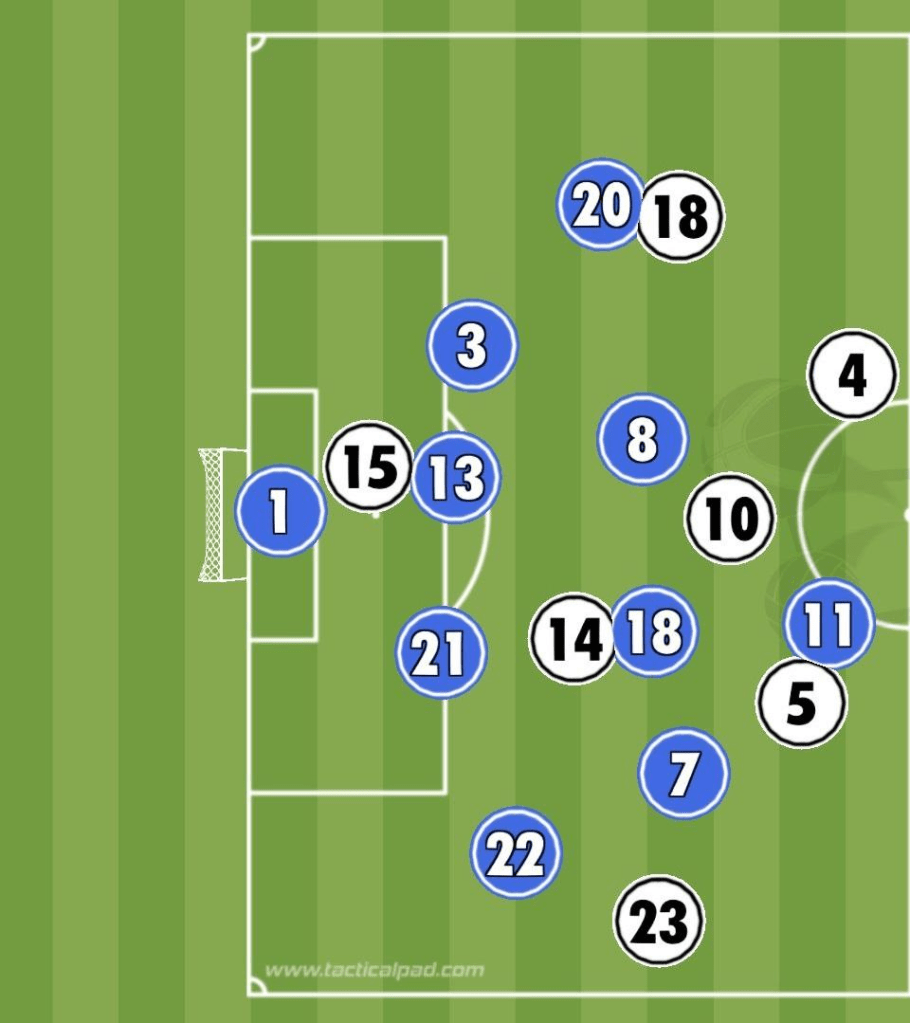
At some points Estonia attempted to maintain possession. Italy lost a little bit of intensity after the initial pressing phase, which is only natural after such a high-tempo start.
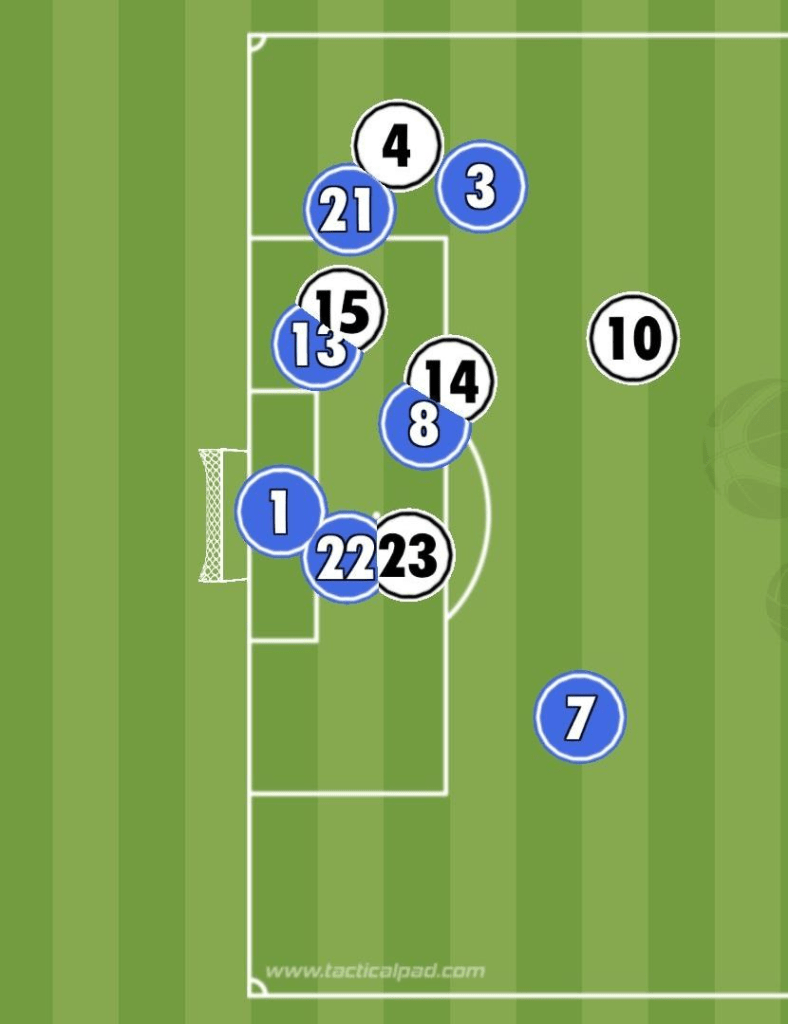
Although Estonia tried to build some structure with their midfielders pushing forward like second attackers and their right-back overlapping the right midfielder, Italy showed an equally disciplined and intense defensive line.
The four defenders dropped deep when needed, with the far-side full-back tucking inside close to the centre-backs as a third centre-back. The midfield line stayed pushed up near Estonia’s attacking third, holding their shape as a four.
Moise Kean often positioned himself near the defensive line so that if Italy won the ball, he could immediately combine and start a counter-attack.
Italy looked to create chances with quick combination play, like in the 3rd minute when Politano passed to Barella, who controlled and played it on to Tonali. Tonali touched the ball to Moise Kean, who laid it back to Politano, already making a run towards goal. Politano controlled and tried a curling shot, but it was deflected by a defender and went just wide of the post.
Italy also found spaces out wide in the final third, often looking to deliver crosses. In the 35th minute, Dimarco sent in a cross for Politano, who headed just over the bar. Then, in the 46th minute, Politano crossed with his left foot towards Retegui, whose header crashed against the crossbar.
When gaps were limited, Italy were not shy about shooting from distance. With Estonia’s defensive line sitting so deep, clear openings were rare, so whenever a small window appeared, Italy tried their luck. Dimarco, for example, fired a long-range effort that flew narrowly wide.
Italy dominated the first half but were frustrated by the outstanding performance of Estonia’s goalkeeper Karl Hein, along with a touch of misfortune. The first period ended 0–0.
Embed from Getty ImagesThe second half started with Italy raising the tempo. In the 58th minute, Dimarco delivered a low cross that deflected off a defender. The ball bounced kindly for Retegui, who cleverly laid it off with a rabona pass to Moise Kean. Kean headed the ball into the net for Italy’s deserved opener.
Just five minutes later, at the 63rd minute, Tonali spotted a gap and played a majestic pass into Retegui, who spun with the ball before sending in a difficult cross towards Zaccagni. Zaccagni launched himself to head it, but Hein made a fine save.
At the 69th minute, Retegui played the ball into Raspadori, who controlled, dribbled past his marker, and returned the pass. Retegui then struck a perfectly placed finish to score Italy’s second goal.
Two minutes later, in the 71st minute, Di Lorenzo played a through ball to Politano, who crossed towards Retegui. The ball ran past him but reached Raspadori, who this time made no mistake and headed in Italy’s third goal.
Embed from Getty ImagesImmediately after the third, Italy briefly lost concentration. Sapinnen received the ball outside the area, turned, and shot powerfully, forcing an incredible save from Donnarumma. The rebound fell to Ainsalu, who tried to score from close range, but Donnarumma closed down the angle brilliantly to preserve his clean sheet.
Near the end of the match, in the 89th minute, Cambiaso received a superb long pass and delivered a chipped cross for Retegui, who headed in Italy’s fourth.
In the 92nd minute, another chipped cross from Cambiaso was met by Bastoni, who headed home Italy’s fifth to seal the match.
Italy showed an intensity that had been missing for some time. They created chances in multiple ways: through quick combinations, crosses, and a strong aerial game, particularly with Retegui.
Embed from Getty ImagesThe 5–0 win could easily have been by a larger margin. Of course, Estonia are not by any means a top-tier team, but Italy had previously struggled to dominate sides at this level. That made this performance a notable improvement in Gattuso’s first game.
Italy showed the ability to construct play with passing combinations, wide deliveries, and strength in the air. It was a deserved win for a team that needed confidence after the last difficult World Cup cycle.
The challenge now is to prove this was not just a new-manager bounce, or simply an emotional response from players wanting to impress, but a genuine step forward. The true test will be how they perform against top-class opposition.
For now, though, Italy have shown enough to give supporters hope of securing qualification for the next World Cup.
Embed from Getty ImagesWritten by Israel Schmidt de Azevedo


 INMR FOOTBALL
Leave a comment