
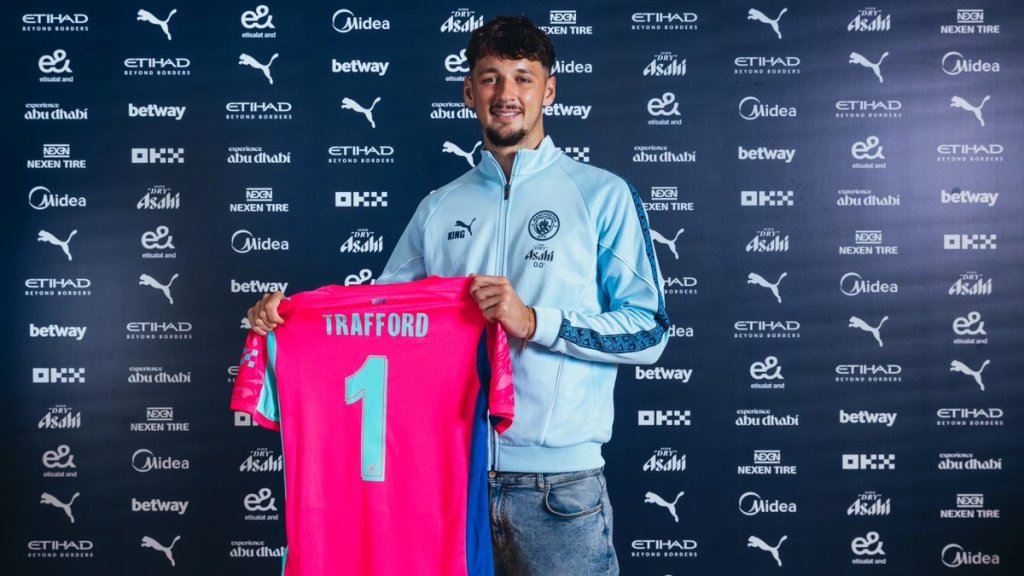
Manchester City recently re-signed James Trafford from Burnley for just £27 million, due to a buy-back clause they implemented back in 2023 when the sold him to the Clarets for £13 million.
This means that overall, James Trafford has cost Manchester City just £14 million. A fantastic price for a young and now experienced Premier League goalkeeper.
This transfer has sparked wider interest in the buy-back clause as it’s becoming a more prominent feature in many young players’ contracts.
Embed from Getty ImagesWhat are buy-back clauses?
In football transfers, a buy-back clause is a clause which allows the selling club to re-sign a player from the buying club at a pre-agreed price. Usually the clause is active for a specific time frame.
This clause is typically used when a club is selling a young player with lots of potential, giving them the option to bring the player back if they improve a lot and increase in value.
This means that selling clubs still maintain a certain degree of control over their promising youth players.
Embed from Getty ImagesWhat are the benefits of buy-back clauses?
The reason we are seeing buy-back clauses in football more often is due to the benefits for both the selling club and buying club.
For the selling club, they are able to get their player back if they develop well and their market value increases. They are also able to reacquire the player for what will likely be a lower price than their market value.
The selling club also gets financial security because if the player doesn’t return, they still receive a transfer fee.
For the buying club, they are able to secure the signing of a promising player that they otherwise wouldn’t have been able to sign. They could also make a potential profit in the future, if the player does develop well and the selling club wish to resign them.
Embed from Getty ImagesWhat players were sold with buy-back clauses in their contracts?
The buy-back clause isn’t a completely new thing, there have been a few high-profile moves involving them in recent years. For example, when Tammy Abraham moved from Chelsea to Roma, the Blues included a £68 million buy-back clause into his contract.
They did the same with Nathan Ake when he joined Bournemouth, but lost the option to exercise that clause when he left the Cherries for Manchester City in 2020.
Manchester United also have the option to re-sign Facundo Pellistri from Panathinaikos in the future.
Tottenham’s newest signing, Xavi Simons, was sold by PSG in 2022 to PSV Eindhoven. He impressed in the Eredivisie and PSG exercised the buy-back option to bring him back to France just one year later.
Embed from Getty ImagesThere have also been cases of clubs buying a player back before selling again, something Aston Villa did in the summer of 2024.
The Villans sold striker Cameron Archer to Sheffield United in January but brought him back to Villa Park because of a clause that, reportedly, saw them obliged to purchase him for a cut-price fee if the Blades were relegated.
Villa parted with the 22-year-old again less than a month later, this time selling him to newly promoted Southampton for £15m.
Embed from Getty ImagesWhy does it matters for the 2025/26 season?
The Premier League’s Profit and Sustainability rules are driving clubs to sell academy players, as they count as “pure profit” on the balance sheet.
Selling youngsters provides immediate financial flexibility under FFP, while buy-back clauses allow the selling club to retain future control and even re-sign players cheaply. This makes deals attractive for buyers too, since buy-back clauses often lower the initial fee.
However, buy-back clauses can harm smaller clubs. They risk losing key players unexpectedly, disrupting long-term plans and reducing financial gains, since the original club can re-purchase at a fixed fee. This limits resale profit even if market value rises.
Embed from Getty ImagesWritten by Isabelle Newnham

 INMR FOOTBALL
Leave a comment