
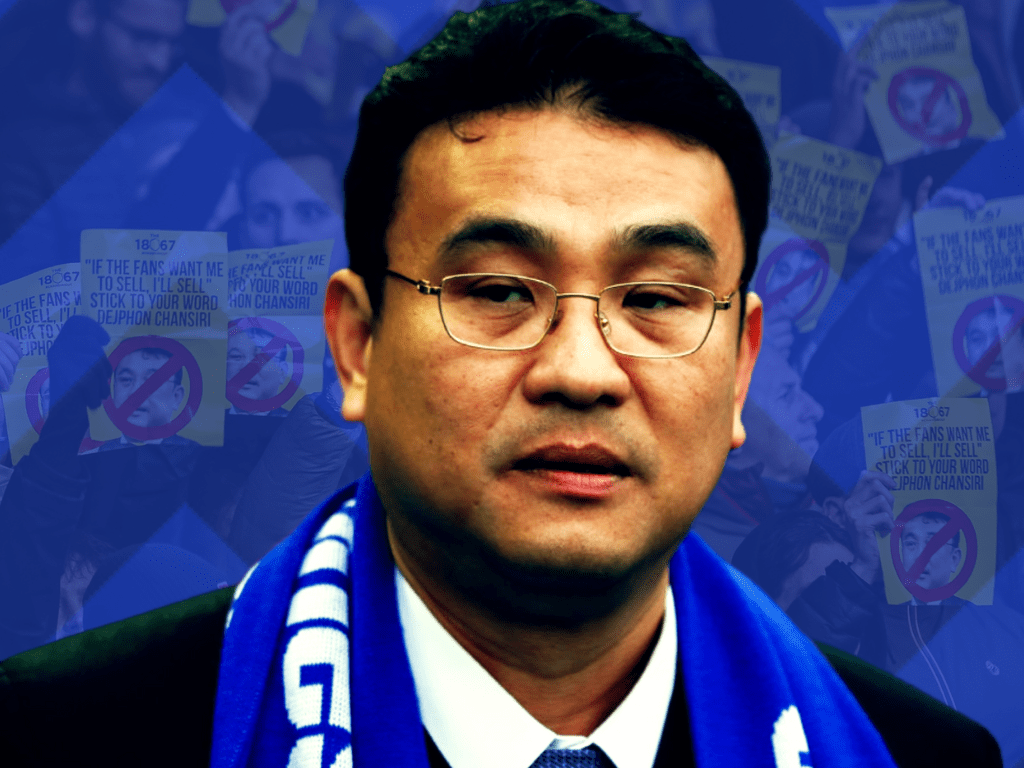
Sheffield Wednesday are in a crisis. They are yet to pay players and staff, and owner Dejphon Chansiri’s shares in the Thai Union Group continue to drop.
This has led them to be officially placed under embargo by the EFL under Regulation 54.1 Non-payment to Players. According to The Star, the club are also believed to be amid a three-window transfer fee restriction, and there have been payment issues with HM Revenue & Customs.
Embed from Getty ImagesWith regards to the embargo, a statement from the club read: “Sheffield Wednesday acknowledge the statement issued by the EFL on Tuesday afternoon. The club continues to seek a resolution regarding outstanding salaries due for the month of May at the earliest possible opportunity.”
“Mr Chansiri sincerely apologises to all players, coaches and staff affected and everyone connected with the club. We will make no further comment at this time.”
Sheffield Wednesday, Club Statement
As a result of the embargo, Sheffield Wednesday will not be able to sign players where a fee is involved, being a transfer or loan fee. The club are also not permitted to have more than 23 senior players.
Embed from Getty ImagesFootball finance expert, Keiran Maguire, said: “In the past, we have seen situations where money has been put into a club to cover losses, money acquired from third-party sources and therefore they have an obligation to repay those amounts when the club is sold.
“That could leave a shortfall, which is one reason somebody might play hardball as far as prospective buyers are concerned.”
There is a possibility that the club could be placed in administration. According to The Star, there are a number of potential buyers who will be waiting to see if this is the case. Buying a club in administration is often easier due to the necessity for the owner to sell.
Notably, Derby County entered administration in 2021, and then owner Mel Morris had to walk away with losses of around £200m.
Embed from Getty ImagesHowever, the club was able to be bought out by David Clowes and stay afloat. The situation is not too dissimilar to the one Sheffield Wednesday currently find themselves in.
If this is to be the case for Wednesday, it would not mean disaster for the club, according to Professor Rob Wilson, who said: “While many will think administration is far from ideal, it’s a well-trodden pathway for professional clubs.
“Whether the owner can afford to relinquish control of his prized asset remains to be seen. Doing so would deliver untold damage to his own personal finances, given his significant investment into the club over the last decade.”
Professor Rob Wilson
Given the situation, it is unlikely that the club can turn their finances around under the current ownership. For the foreseeable future, the off-field situation is far more likely to be a priority than on the field.
Embed from Getty ImagesThis could prove costly going into next season, with current boss Danny Rohl appearing unhappy at the club. Furthermore, the lack of payment for players could see them feasibly depart the club for free.
Since taking ownership of the club in 2015, the decade under Chansiri has been a rollercoaster for Sheffield Wednesday. The aim for Chansiri was promotion to the Premier League, though the Owls have since been relegated to League One and now find themselves mid-table of the Championship, the exact spot Chansiri inherited the club in.
The first season under Chansiri saw heavy investment and culminated with a Championship play-off final defeat to Hull City. The year after, the Owls would once again reach the playoffs but were beaten in the semi-final by Huddersfield Town on penalties.
Embed from Getty ImagesIn July 2020, Sheffield Wednesday were deducted 12 points for the coming season. This was for breaching the League’s Profitability and Sustainability Rules for the three-season reporting period ending in 2017–18.
The points deduction was eventually reduced to six, though it was revealed that Chansiri was securing debt against the stadium. The sale of Hillsborough was listed in the club’s 2017-18 accounts despite being sold a year later.
The first instance of players not being paid came in January 2021, and at the end of the season, the Owls were relegated to League One. The club were promoted back to the Championship two years later under Darren Moore.
Embed from Getty ImagesWritten by Callum Pawley



 INMR FOOTBALL
Leave a comment